Speech & Spoon PLLC
PEDIATRIC SPEECH AND FEEDING THERAPY
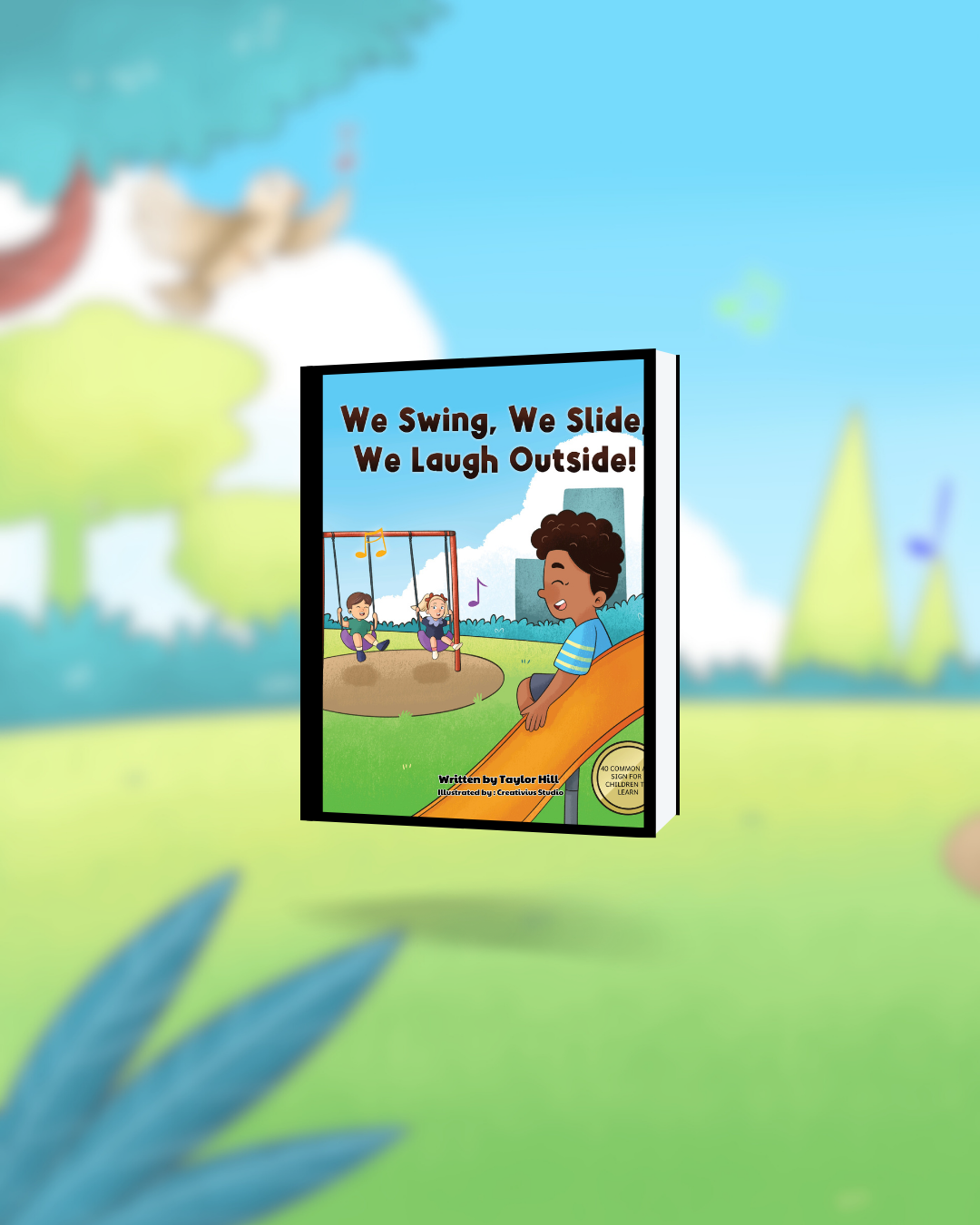
Research Behind the Book
A Speech & Spoon approach to early communication, connection, and visual learning.
Why We Included American Sign Language (ASL)
Many young children—especially those developing language at their own pace—benefit from having more than one way to communicate. ASL gives children a visual, motor-based way to express their needs before (or while) spoken language develops. Research shows that pairing gestures or signs with speech can:
Reduce frustration by giving children a clear, accessible way to communicate
Strengthen early vocabulary because signs highlight key words
Support children with expressive language delays, autism, and late talking
Boost connection between caregivers and children through shared attention and interaction
Using ASL doesn’t replace spoken words—in fact, studies show it can increase spoken communication by reinforcing meaning in multiple ways.
Why Visual Cues Matter for Learning
Our brains are wired for visual learning. Studies estimate that 70–80% of the information we take in is processed visually, making it the body’s most powerful learning system. For young children—especially early communicators or those who need extra language support—visual cues help because they:
Simplify complex language into something concrete and easy to see
Support comprehension even when a child is still learning to understand words
Improve attention by pairing movement, pictures, and meaning
Strengthen memory by giving the brain multiple pathways to retrieve a word (visual + auditory + motor)
Reduce cognitive load, making language more accessible and less overwhelming
This is why visual communication is foundational in early intervention, AAC, and feeding/speech therapy—because children learn best when they can see what we mean.
How ASL + Visual Supports Work Together
Combining spoken words, signs, and engaging illustrations helps children develop:
✔ Clearer understanding
They see the sign, hear the word, and match it to the picture or action. Repetition across senses makes language “stick.”
✔ Stronger expressive language skills
Children can express themselves—through gestures, signs, and eventually words—long before speech is fully established.
✔ Whole-body learning
ASL uses movement, motor memory, eye gaze, and joint attention—skills that support overall communication development.
Rooted in Speech & Spoon’s Mission
At Speech & Spoon, we believe language should be nourishing, accessible, and joyful—just like feeding. This book intentionally blends:
Early language milestones
ASL vocabulary supported by research
Visual learning principles and developmental science
Diversity, inclusion, and connection
Because children communicate best when we meet them where they are and give them more than one way to grow.